Laying out your garden

Four ideas that turn plants into habitat

Plant in layers from tree to groundcover, keep dense shelter close, leave some open sunny ground, and add water, from a bird bath to a frog pond.

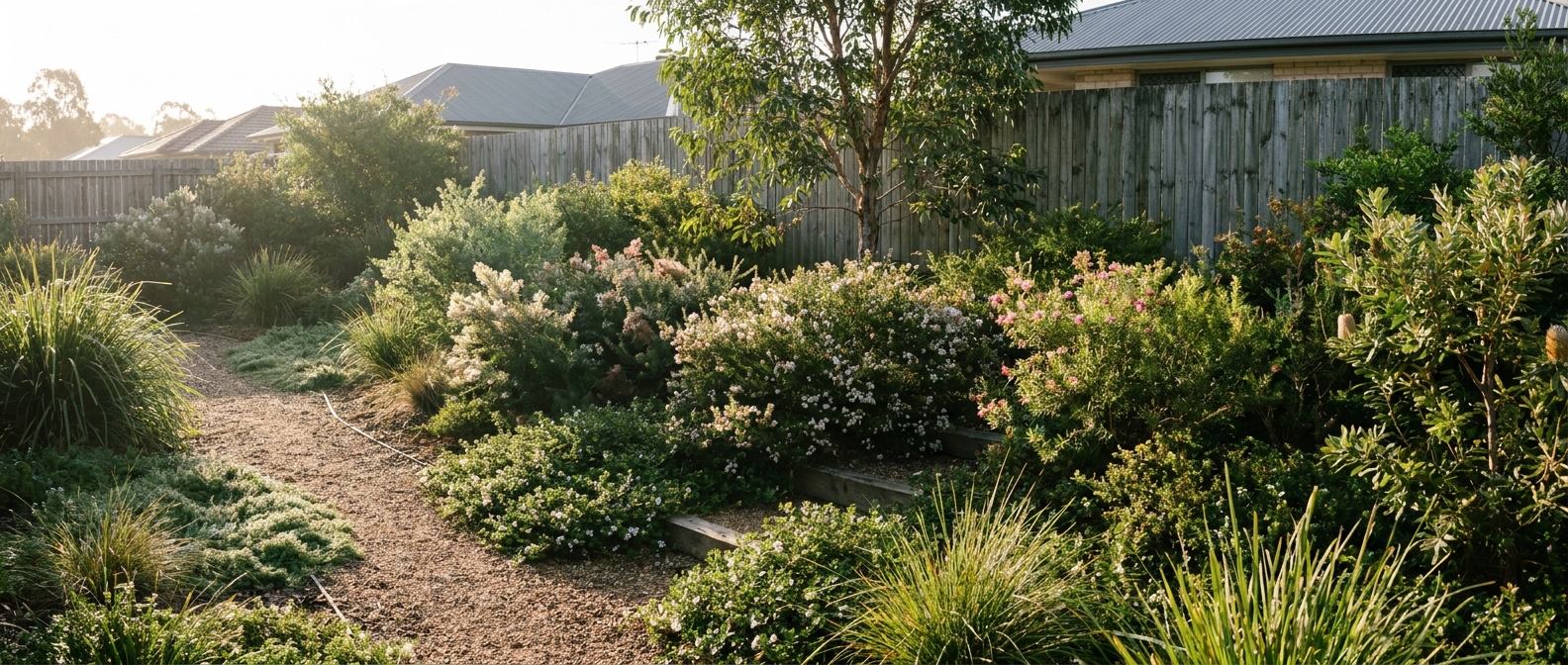
A layered native garden stepping down from a small tree and flowering shrubs to grasses and groundcover beside a gravel path.

Build your garden layer by layer

A garden drawn in cross-section, its five layers numbered as in the list 1 2 3 4 5
  1. Small trees

    A small tree such as Brisbane Wattle or Native Mulberry gives height, perches, and flowers or fruit for birds.

  2. Dense shrubs

    Dense shrubs like Currant Bush and Hop Bush give small birds cover, and caterpillars something to eat.

  3. Groundcover and grasses

    Kangaroo Grass, Flax Lily and Native Violet cover the soil, feed butterflies and bees, and hide skinks.

  4. The water's edge

    Knobby Club Rush and Karamat at a pond's damp edge give frogs cover, and native bees flowers.

  5. Open sunny ground

    A few flat rocks in full sun, with low plants close by, give lizards a place to warm up and a quick way to hide.

Water, from a bird bath to a pond

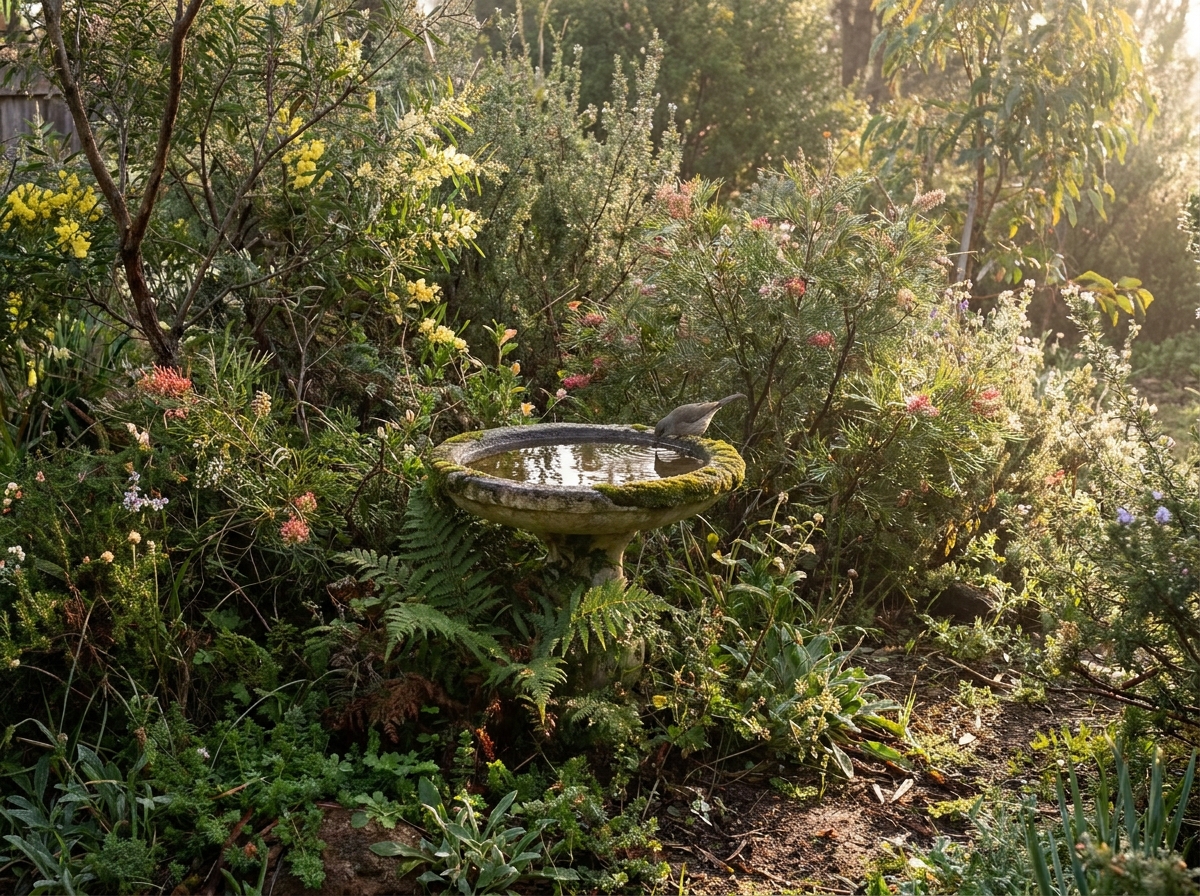
A stone bird bath among flowering native shrubs and ferns, with a small bird drinking at its rim.

A bird bath

Set a shallow bath in dappled shade, with perches nearby and dense shrubs a short hop away, so birds can escape if they need to. Add a few pebbles or a stick, so a bird that falls in can climb out.

Keep it out of reach of cats, and change the water every day or so.
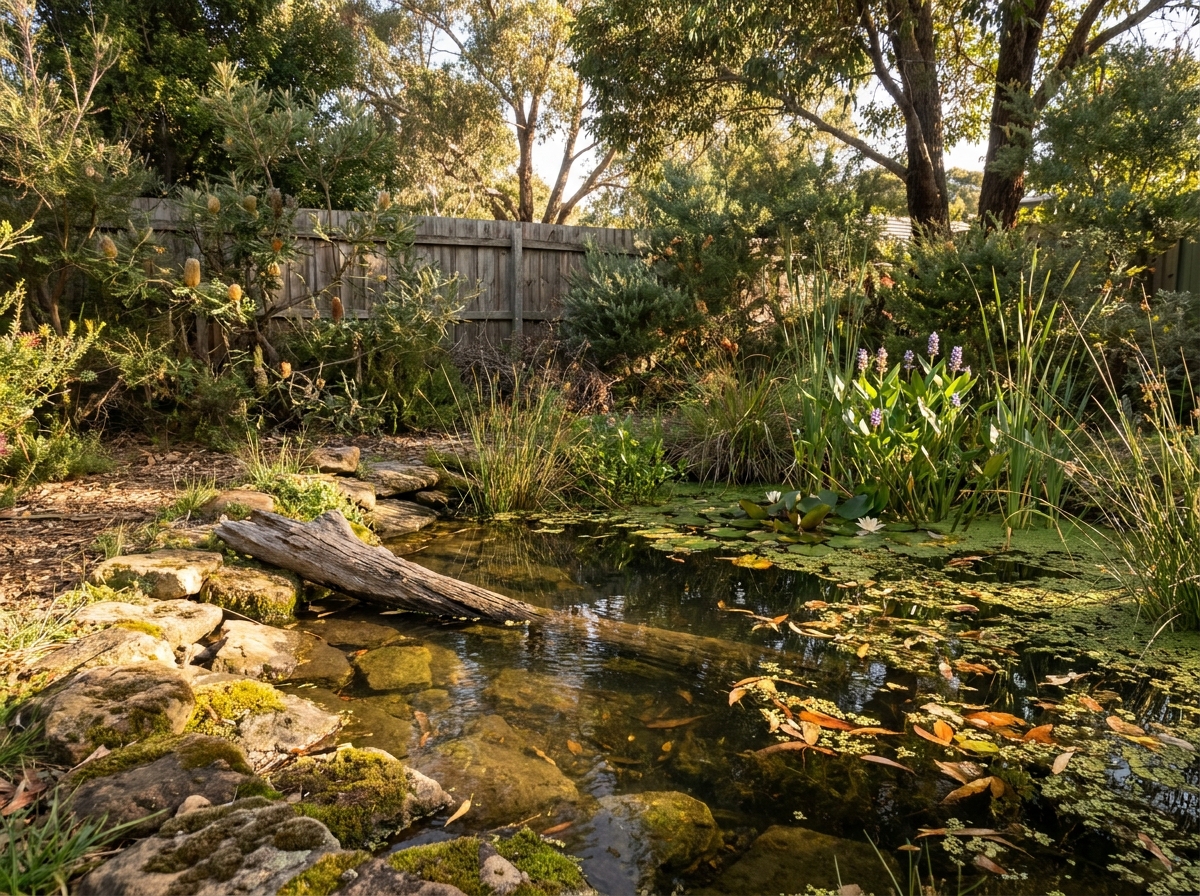
A small backyard pond with mossy rocks, a log at its edge, floating leaves, and reeds at one end.

A frog pond

Give it shallow, sloping edges, with rocks and logs so frogs can climb in and out. Keep at least a third of the pond in winter sun, let plants cover no more than a third of the water, and keep fish out.

Use no pesticides nearby. With small children about, a shallow frog bog may suit better.

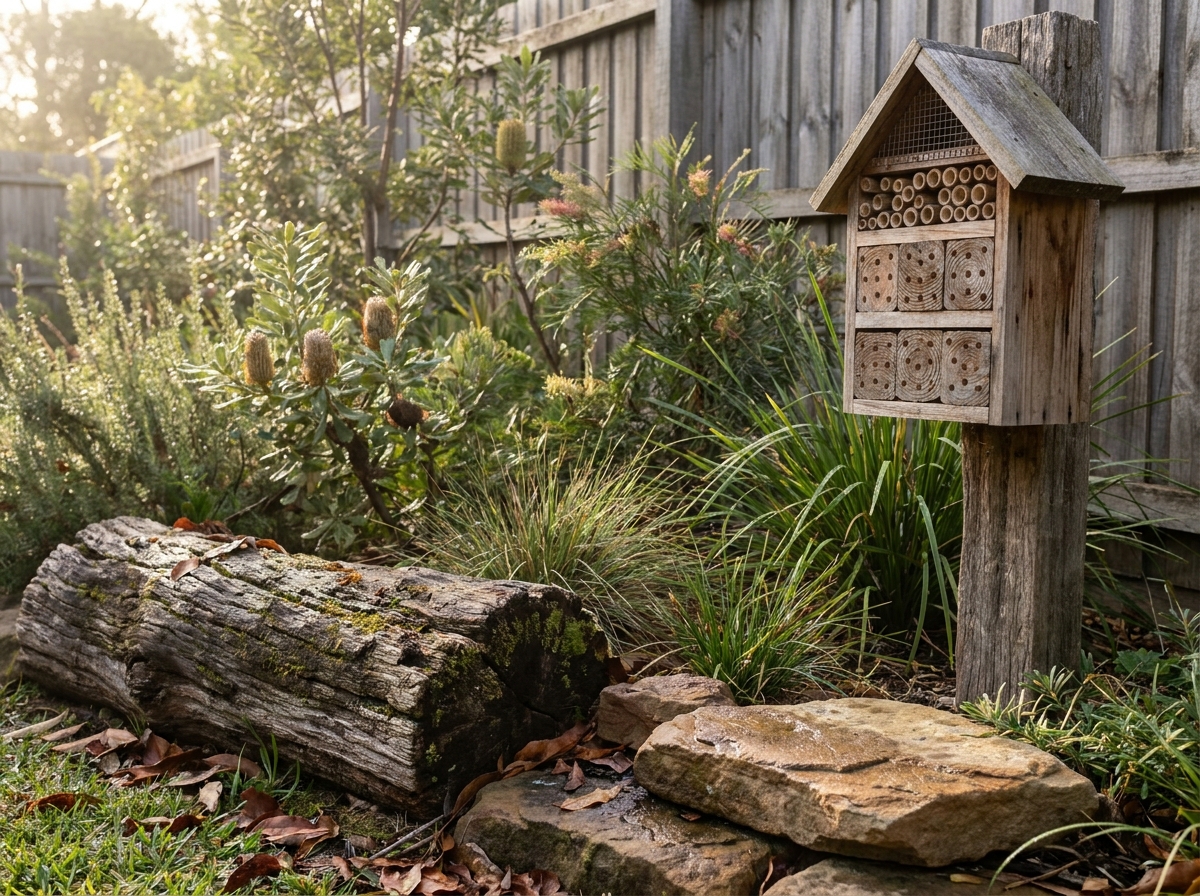
A garden corner with an old log, flat sandstone rocks, leaf litter and a timber bee hotel on a post among native plants.

The small extras that help wildlife

  • Logs and leaf litter

    Leave leaf litter as mulch and lay an old log in a quiet bed: skinks, lizards and insects live in it.

  • Sunny rocks

    Set flat rocks where the sun reaches, with small shrubs alongside to keep part of them cool.

  • A native bee hotel

    Fix a timber bee hotel to a post among flowering plants; some native bees may nest in its holes.

Replacing lawn, one bed at a time

  1. Start with one bed you can see from the house, and mark its edge on the ground with a hose.
  2. Clear the grass inside the line, then spread a layer of mulch to keep the soil cool and damp.
  3. Plant in layers: a shrub or two at the back, then grasses and groundcovers towards the front.
  4. Plant in mild weather, water each plant in well, and start the next bed once the first has settled.

Get a layout for your own garden

The planner groups your plants by layer, shows where each one goes, and adds the water and shelter that suit your garden.

Plan your garden